
Project details
The Shields Ferry operates between North and South Shields, providing a vital service to the public. The condition of the ferry landing at North Shields has deteriorated over recent years, exacerbated by storms in 2019. Following a condition survey in 2023, our client took the decision to carry out a number of repairs, ensuring the landing platform could remain operational. Following a competitive tender process, Southbay were awarded a contract to undertake all identified repairs.
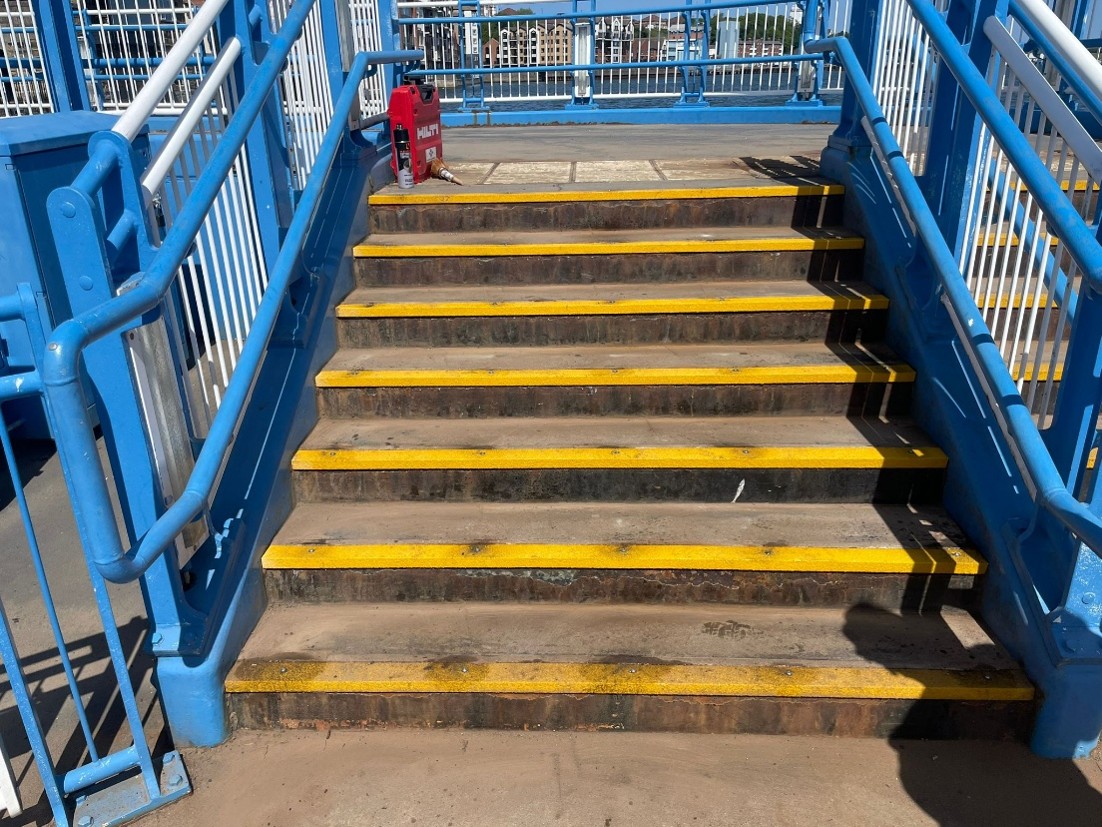
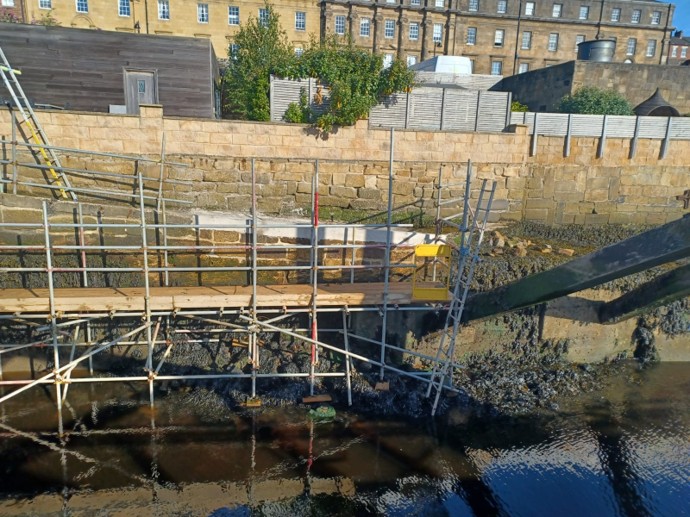
The contract involved the completion of repairs across several areas of the landing platform in the form of the pontoon, jetty, pier, linkspan and river wall. Works to the pontoon included the replacement of failed chain anchorage, step nosing’s, and welding to an existing pile. Renewal works to the jetty included installation of elastomeric pads to bearings, replacement of secondary longitudinal beam sections, refixing of deck plates, and localised surface repairs. Linkspan works included repair and levelling of toe plate hinges, replacement of missing electrical cover plates, refurbishment and repainting of bearing elements, lubrication of link pins, tightening of bolts, and replacement of corroded fixings. Works to the river wall included rebuilding of storm-damaged wall sections, removal of undercut concrete, installation of a missing ramp with new concrete capping, and replacement of corroded wire rope with cross dowels.
Our work scope also included the replacement of electrical and mechanical infrastructure in the form of new cabling, and lighting. This renewals contract will ensure the ferry landing can remain fully operational, whilst a new terminal is constructed further down river. The project was successfully delivered with no reportable accidents.
The project was completed whilst the ferry terminal remained fully operational, which involved a significant element of public interface. To manage this, temporary barriers were used to segregate the public from the works area, with advanced signage placed to notify members of the public of disruption and footpath closures/ diversions. Significantly disruptive work elements were programmed across night shifts. During welding operations, temporary screens were used to protect the public from sparks and flashes.